Racing games mostly sort themselves by two questions: do you drive, and do you run the team? Put them on a map and one corner is almost empty. That’s the corner Little Engines was built for.
race broadcast simulator noun
A motorsport game where you neither drive nor manage a team. Computer-driven cars race for real, and the game is the broadcast: the cameras, the commentary, the timing and the story of the race.
Also called
spectator racing game
racing game you watch
motorsport broadcast game
I call Little Engines a race broadcast simulator. It's a mouthful, and I use it because none of the usual labels fit. It isn't a racing sim, because you never drive. It isn't a management game, because you never run a team. This last part of my three-part series explains where it sits instead, and what living there means for the game.
Two questions sort most racing games
Genre labels hide the question that matters most: what are your hands doing while the race is on? Two answers cover most motorsport games. Do you drive the car? And do you run the team?
Racing sims and arcade racers put you behind the wheel. Management games put you on the pit wall. Career modes in driving games often do a bit of both. Plot them and you get a map with four corners.
Racing games by what you do during a raceA rough map
You don’t run the teamYou run the team
Drive · run the teamCareer racersYour hands: the wheel on Sunday, contracts and upgrades in between.Watch · run the teamManagement gamesYour hands: the pit wall. The race tests the decisions you made.Drive · don’t run the teamRacing sims and arcade racersYour hands: the wheel, the brakes and the racing line.Watch · don’t run the teamLittle EnginesYour hands: free. The broadcast is the game.
You driveYou watch
Genres overlap, and plenty of games stretch across two corners. The point is the bottom right: where you neither drive nor run a team.
The empty corner
Bottom right is where you neither drive nor run a team. It's where most motorsport fans actually spend their time: watching a broadcast, following the battles, arguing about strategy. Yet it has rarely been a game, because a game there has nothing to lean on. There's no lap to perfect and no budget to balance. The race has to carry everything.
So in that corner, the broadcast is the game. That's where the name comes from.
What a race broadcast simulator is made of
A broadcast is a stack of jobs, and in Little Engines the game does every one of them live, in real time, for a race nobody has seen before. Each layer feeds the next.
The broadcast stackLive, every race
The race22 computer drivers, tyres, stops and weather, decided on track
The directorWatches every gap and finds the story worth showing
The camerasOverhead, Trackside, Chase and Onboard
The boothA lead and an analyst with 22,000+ recorded lines
The graphicsTiming tower, gaps, tyres and team radio
YouWatch, take the cameras, or rewatch the replay
Every layer runs live during the race. Even the commentary is chosen on the fly, from recorded lines, as the race unfolds.
Spectator modes in driving games usually stop at the first layer: the cars race and you get a free camera. A race broadcast simulator needs the whole stack, and needs the bottom layer to be good enough to watch. That's why so much of the work has gone into the drivers and the booth.
One question for every feature
Living in the empty corner gives me a simple test for every idea: does it make the race better to watch? If it does, it's in. If it gives the player a job at the race's expense, it isn't. It rules out more than you'd think.
Ideas
A director that cuts to the battleCar upgrades and budgetsA two-voice commentary boothDriving one lap yourselfTyre wear on the timing towerHiring and firing driversRivalries that carry over a seasonA player team with a stakeRenaming and repainting the gridScripted drama
The testDoes it make the race better to watch?
In the game
Not for this game
Ten ideas, one test. Everything in Little Engines has been through it.
Good neighbours
None of this is a knock on the other corners. They do different jobs, and I play all of them.
Want to perfect a lap?Play a racing sim.The wheel, the braking point, the set-up. Nothing beats doing it yourself.Want to build a dynasty?Play a management game.Budgets, staff and a car you develop over seasons. The race is your exam.Want to watch a great race?Play Little Engines.Twenty-two drivers, four cameras, a live booth and a story nobody wrote.
Where it goes from here
As a one-person studio, I can’t build everything, and I’d rather not. Everything I add goes through the same question, which keeps the game focused on what it does best. New circuits give the broadcast new places to tell stories. Better drivers make for closer fights. A sharper director finds them sooner. If you'd like to follow along, the devlog and its RSS feed are the place, and you can sign up to hear when the Steam page and demo open.
Missed the start?Part one covers why I made a racing game where you watch it all unfold, and part two how it differs from a management sim.
FAQ
Questions about race broadcast simulators
What is a race broadcast simulator?
A motorsport game where you neither drive nor manage a team. Computer-driven cars race for real, and the game is the broadcast: the cameras, the commentary, the timing and the story of the race. Little Engines is one: twenty-two computer-driven cars race for real while you direct the cameras and a live booth calls every move.
Is a race broadcast simulator the same as a racing sim?
No. In a racing sim you drive. In a race broadcast simulator nobody human drives: computer-driven cars race for real and you watch, choosing the cameras and following the story.
How is it different from a spectator mode?
A spectator mode is a feature added to a driving game, usually a free camera over cars going round. In a race broadcast simulator the broadcast is the whole game: a director that finds the action, a live commentary booth, timing graphics and drivers built to race each other with nobody else to beat.
Do I need to know about motorsport to enjoy it?
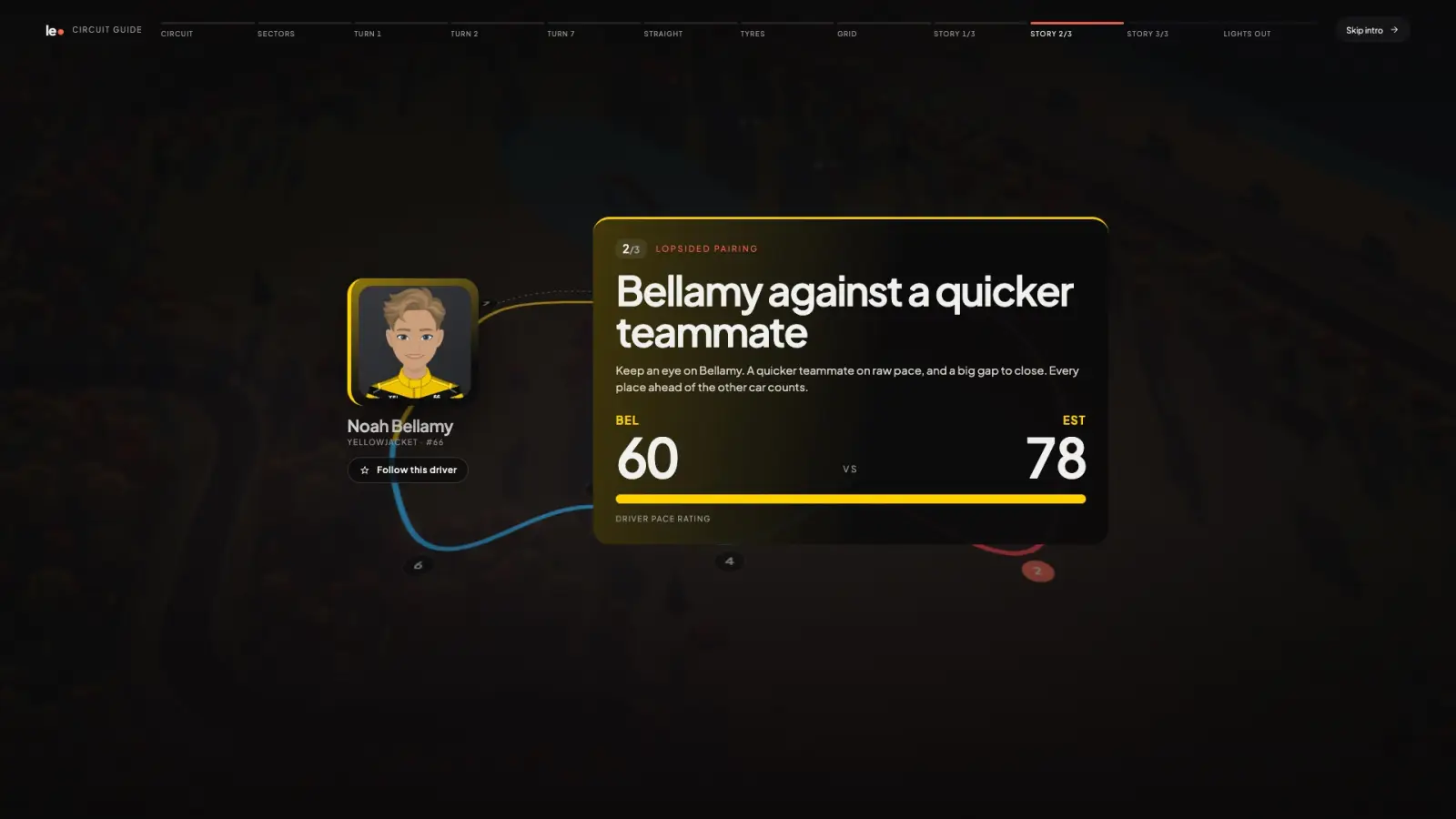
No. The booth explains what’s happening as it happens, and a circuit guide before each race introduces the track and the stories to watch. If you do know your undercuts from your overcuts, the timing tower has the detail.
Where can I get Little Engines?
Little Engines is coming to Steam for Windows, macOS and Linux. Sign up for updates to hear when the Steam page and demo open.
Take the best seat in the house.
Little Engines is coming to Steam for Windows, macOS and Linux. Get one email when the Steam page opens, one when the demo lands and one on launch day.