Little Engines often gets filed next to motorsport management games. They share a lot of furniture: tyres, pit stops, standings. But you sit in a very different chair. Here’s the difference.
In a management simYou run the team.Budgets, staff, upgrades and strategy calls. The race is the exam at the end.
In Little EnginesYou run the broadcast.No team and no stake. The race is the whole show, from the lights to the flag.
What they shareTyres, stops and standings.The strategy depth is all there. You read the pit wall instead of running it.
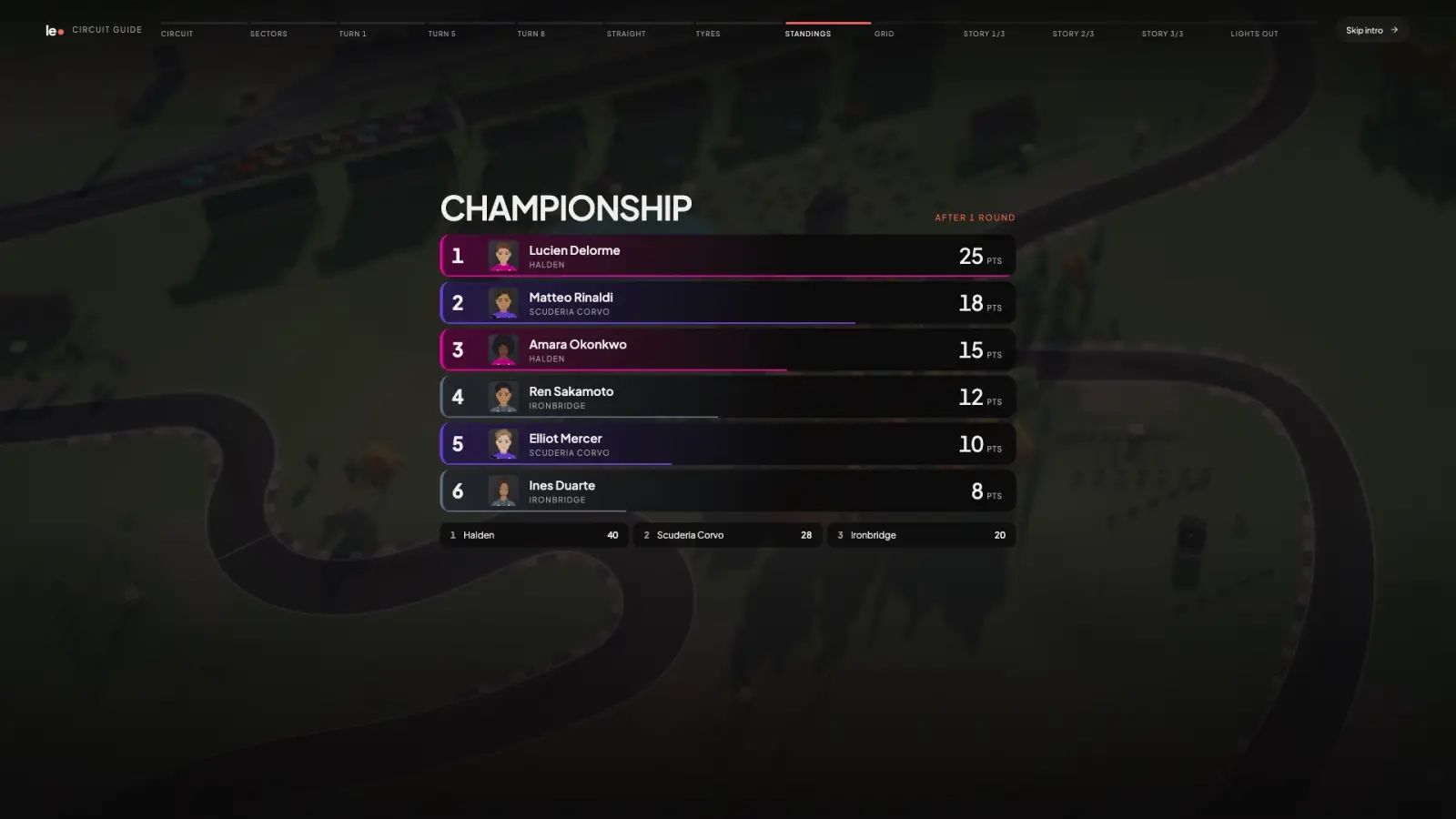
When people hear "a racing game you watch", most of them think of a motorsport management game. It's a fair guess. Both genres have computer-driven cars. Both care about tyre wear, pit windows and the championship table. The standings graphic above would look at home in either.
Look closer and they're built around different questions. A management sim asks can you build a winner? Little Engines asks what happened out there, and did you see it? This is the second of three posts about why Little Engines exists and where it fits.
Two chairs
The quickest way to see the difference is to look at what's in front of you while the race is on.
Motorsport management simThe team principal’s desk
UpgradesApprove the new front wing?£1.2m · ready in three racesDecide
ContractsYour lead driver wants a new dealTwo offers on the tableDecide
StrategyBox this lap or stay out?Rain due in four lapsDecide
Set-upRear wing up two clicks for qualifying?Engineers split on itDecide
Decisions made this race 0
Little EnginesThe director’s chair
Live · Overhead
The car behind is right on the gearbox now.
Decisions needed this race 0
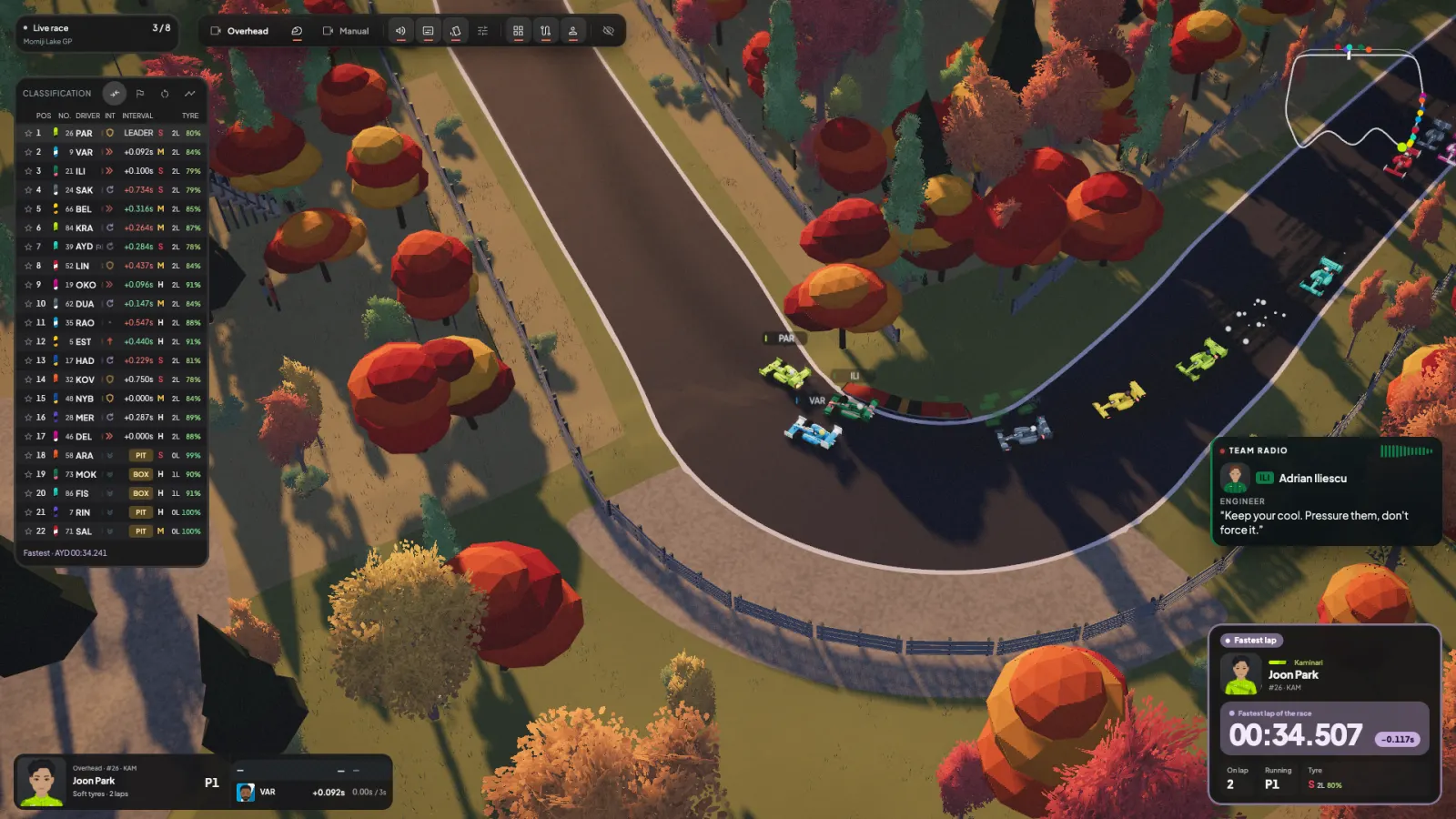
Illustration. Left: the kind of choices a management game puts in front of you on a race weekend. Right: the Little Engines broadcast, with real captures and commentary lines from the game.
A management sim asks: can you win?
In a motorsport management game you're the team principal. You hire drivers, balance a budget, develop the car and make the strategy calls. The race is the exam at the end of all that work, and because the work is the game, the race is often shown in a compact view, sped up, or summarised between decisions.
That isn't a criticism. It's the right shape for a game about building a winner, and I’ve lost whole weekends to them myself.
Little Engines asks: what happened?
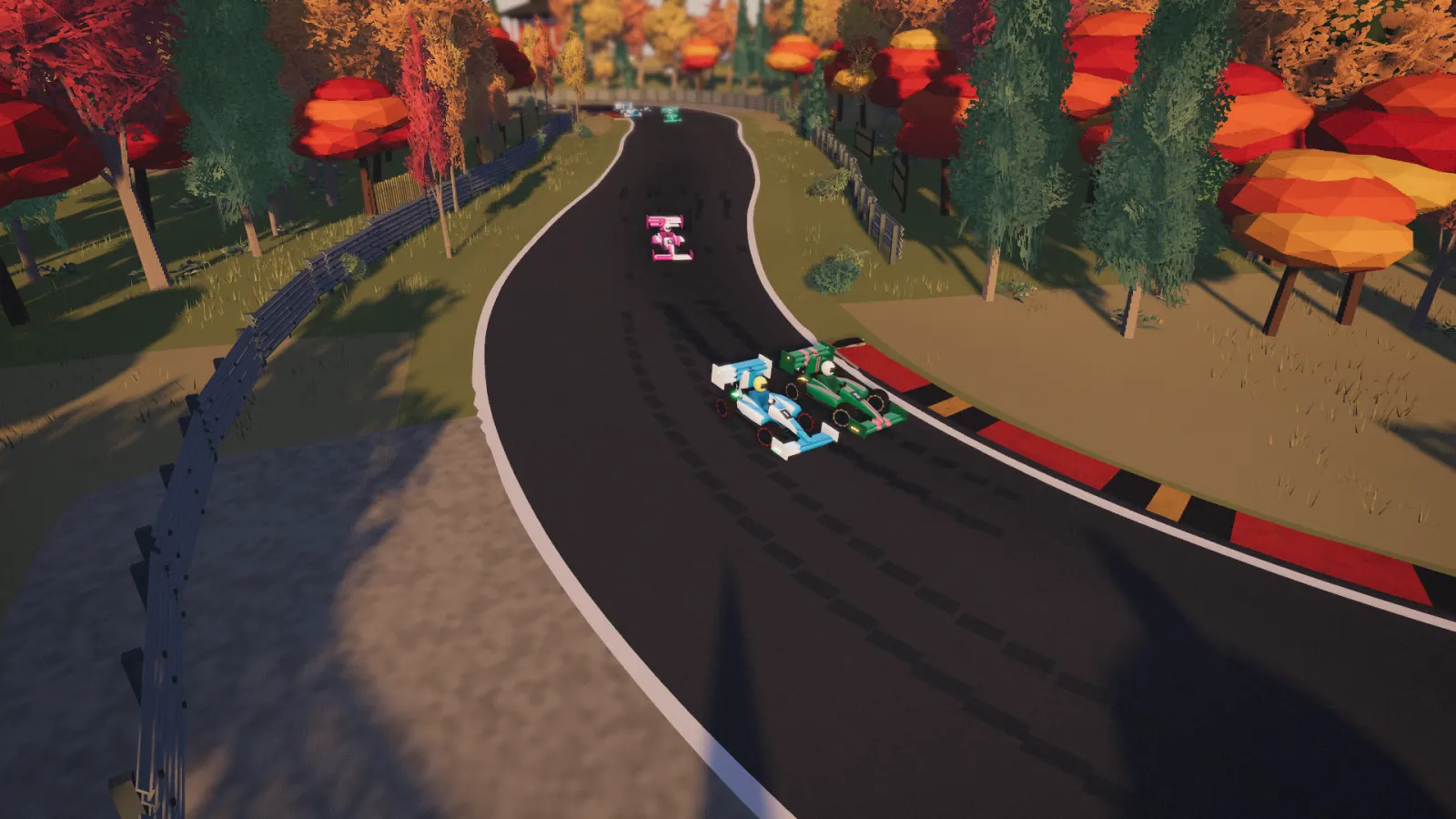
In Little Engines you don't own a team, and none of the twenty-two cars is yours. Nothing you do helps anyone win. Your job is to see the race: find the fight that matters, follow it and understand it. The race isn't the exam at the end. It's the whole show, broadcast at real speed from the lights to the flag, with a booth calling it live.
Where the race sits in a sessionIllustration · not to scale
Motorsport management sim
FactoryUpgrades and researchStaffContracts and hiringPracticeSet-up and tyre runsRace and strategy callsOften sped up or compact
Little Engines
GuideTrack and storiesGridTyres if you likeThe raceFull broadcast at real speed, called liveResultsPodium and table
A rough picture of where your attention goes. Before each Little Engines race a circuit guide introduces the track and the stories to watch; after it come the podium, the standings and a saved replay.
Management sim vs race broadcast simulator, side by side
Here's how the two compare on the questions that shape each game.
A motorsport management sim compared with Little Engines
Question
Motorsport management sim
Little Engines
Who are you?
The team principal
The broadcast director, and the viewer
What’s your stake?
Your team’s results, and your job
None. You want a good race
Before the race
Hiring, upgrades, budgets and set-ups
Pick a circuit. If you like, set the grid and tyre plans as a what-if
During the race
Strategy calls and driver orders
Cameras, driver focus, live timing and team radio
How the race looks
Often compact, sped up or summarised between decisions
A full 3D broadcast at real speed, called live by a two-voice booth
The cars
Your two, and the opposition
Twenty-two computer drivers, none of them yours
A great result
Your driver wins
Something worth talking about
After the race
Read the report, plan the next upgrade
Watch the replay, check the standings, wait for the next round
The pit wall without the pressure
I kept the strategy depth, because strategy is what makes a race worth reading. Soft, medium and hard tyres wear and fall away at different rates. A pit stop costs real time. A late shower can turn the order upside down. The difference is that you read the pit wall rather than run it. When a driver gambles on an early stop, you get to watch whether it pays off, and it's never your problem if it doesn't.
The undercut is the classic example: pit first, use the fresh tyres to go faster while your rival's wear out, and come out ahead when they finally stop. Here's one, lap by lap.
Lap9 / 20
Rinaldi to Delorme on the road+1.8s
7
Matteo RinaldiScuderia Corvo
S
Tyre wear
Stuck behind
46
Lucien DelormeHalden
S
Tyre wear
Leading the pair
Rinaldi has been 1.8 seconds behind Delorme for six laps. Both sets of softs are fading.
Illustration of an undercut between two drivers from the Little Engines grid. In a race, the timing tower, the gaps and the booth tell you the same story as it happens.
Why there's no team of your own
I tried imagining Little Engines with a player team, and every version made it worse to watch. A stake changes what you look at. With a team of your own you'd follow your two cars and miss the race. You'd be pleased when a rival crashed out instead of sorry the fight was over. The best battle on track would become a distraction.
Without a stake, every fight is worth your attention, and the grid's own stories can take the lead: a driver on a run of form, a rivalry that keeps flaring up, a title going down to the last round. The broadcast picks those up because it isn't biased towards anyone.
Favourites are allowed
No team doesn't mean no favourites. The Paddock lets you rename drivers and teams and repaint every livery with 35 patterns, so you can put your friends on the grid and cheer them on. The booth even learns to say the new names. Cheering is allowed. Managing just isn't required.
Which one is for you?
If you want to run a team, build a car and live with the consequences, a management game is the right choice, and Little Engines won't replace it. If you love the races themselves, the strategy, the fights and the storylines, and you'd rather watch them unfold properly than skip to the result, that's what I made Little Engines for.
Next in the series:part three maps racing games on two questions and shows where a race broadcast simulator sits.
FAQ
Questions about Little Engines and management games
Is Little Engines a motorsport manager game?
No. You don’t run a team, hire drivers, manage a budget or develop a car. Little Engines is a race broadcast simulator: you watch twenty-two computer-driven cars race and choose how to see it.
Can I make strategy calls during a race?
Not once the lights go out. Every team makes its own calls during the race. Before a race you can set the starting grid and the tyre plans as a what-if, then watch how it plays out.
Does Little Engines have tyre strategy and pit stops?
Yes. Soft, medium, hard and wet tyres wear at different rates, and drivers pit when their strategy calls for it. Undercuts, long stints and late switches to wets all happen, and the timing tower, gaps and commentary help you follow them.
Can I follow one team or driver?
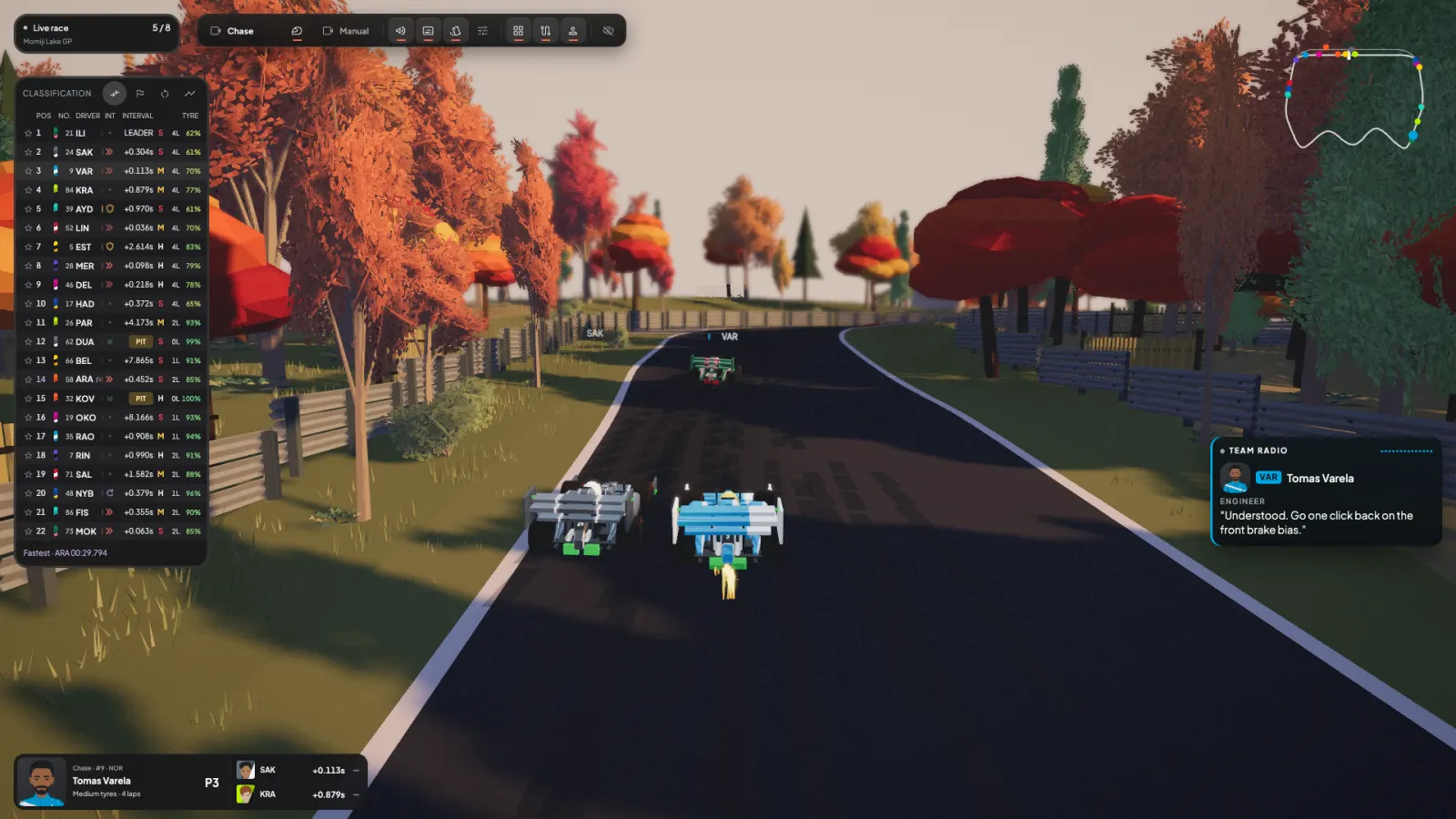
Yes. Take the cameras and follow any driver from Overhead, Trackside, Chase or Onboard. You can also rename and repaint the grid in the Paddock to put your favourites on track.
Is there a championship mode?
Yes. Run single races or full championships with points, standings and rivalries that carry over from round to round.
Take the best seat in the house.
Little Engines is coming to Steam for Windows, macOS and Linux. Get one email when the Steam page opens, one when the demo lands and one on launch day.