Twenty-two drivers, nobody at the wheel
Every car in Little Engines is computer-driven. Here is how ratings, temperament and the car combine to give each of the 22 drivers their own racing style.
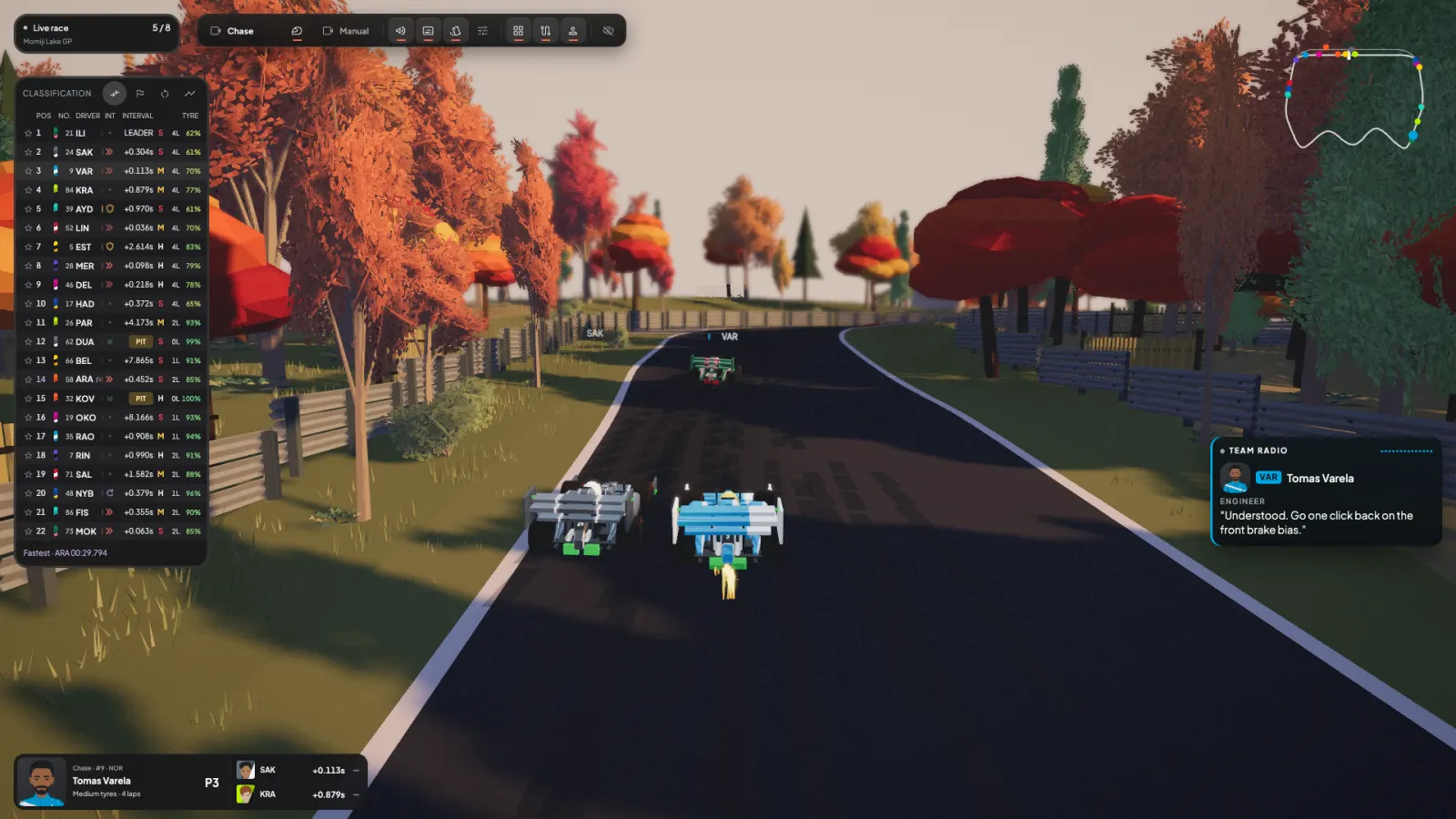
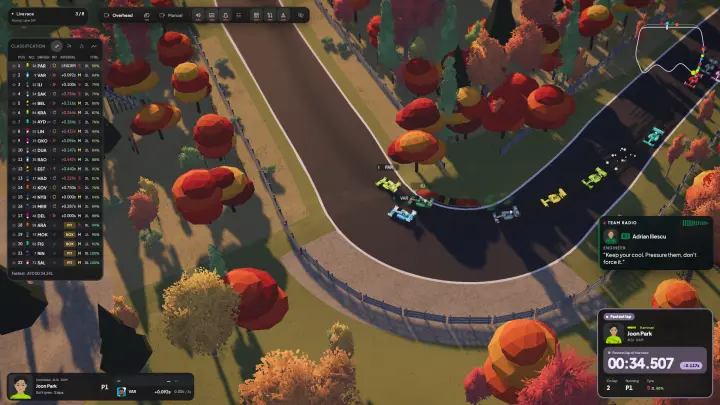
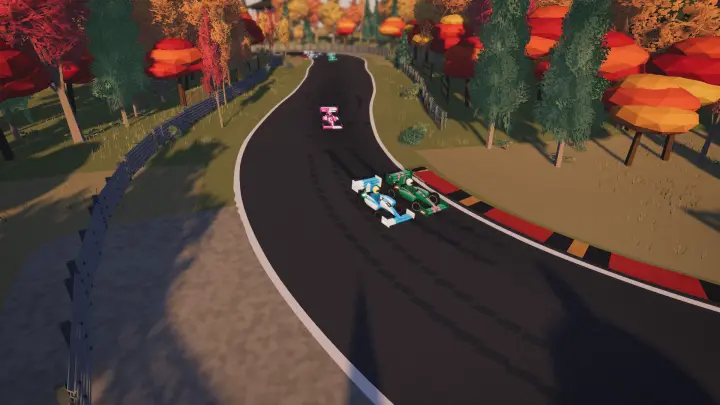
Little Engines is a racing game where you watch it all unfold. All twenty-two cars are computer-driven, and the race is decided on track rather than written in advance. The interesting question is how to make twenty-two autonomous drivers feel like twenty-two different people.
Ratings
Every driver has a set of ratings out of 100: pace, braking, handling, traction, consistency and tyre care. They aren't cosmetic. A driver with strong braking can go deeper into a corner. One with strong traction gets off it sooner. One with high tyre care is still quick at the end of a long stint, when everyone else's tyres are falling away.
Temperament
Ratings say what a driver can do. Temperament decides what they choose to do. Aggression and patience shape who attacks at the first chance and who sits back and waits for a mistake. That is where the archetypes come from. Matteo Rinaldi is an explosive corner-exit specialist. Amara Okonkwo is a patient tyre specialist. Joon Park lives for the late-braking move. Put them on the same piece of track and you get a different kind of fight each time.
The car
Teams bring the car: top speed, acceleration, braking and handling. A great driver in a slow car has to find time somewhere else, and that tension produces a lot of the best races.
Memory
Across a championship the drivers carry form, and head-to-head duels and contact are remembered race after race. Rivalries aren't something I write. They grow from what happened on track.
The whole field, with every team, rating and archetype, is on the drivers page.